



Martín Balbo has worked with technology since he was eight years old. In late 2023, an accident left him with tetraplegia following a cervical spinal cord injury. Since then, rehabilitation has meant far more than physical recovery. It has meant rebuilding his independence, his work and his sense of self, with voice control, automation and AI playing a growing part. In this interview, Martín reflects on his journey, on what technology can and cannot yet do for people living with disability, and on what healthcare professionals, researchers and developers can learn from lived experience.
Reimagining Independence: Martín Balbo on Rehabilitation, AI and Assistive Technology
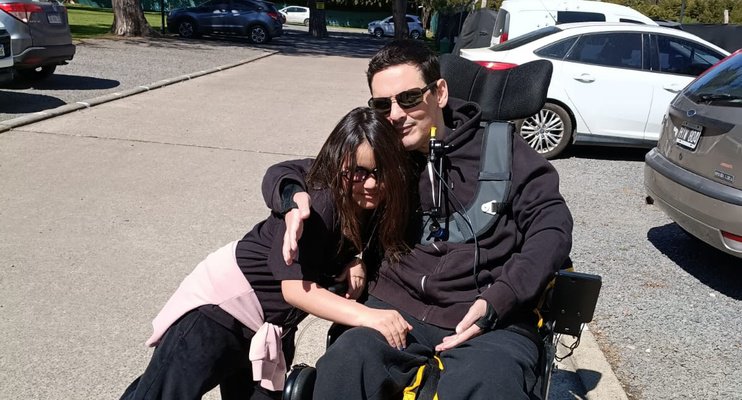
Hi Martin, can you introduce yourself and tell us a little about yourself and your rehabilitation journey following your spinal cord injury?
I’m 47 and live in Argentina. Technology has been part of my life since I was eight years old. It was part of my life long before it became my profession.
In late 2023, I had an accident that caused a cervical spinal cord injury and left me with tetraplegia. After the accident, I began a rehabilitation programme that includes motor and respiratory physiotherapy, as well as different forms of exercise, such as supported standing. It is an ongoing process and part of my everyday life.
Rehabilitation also had a psychological dimension. It was not just about rebuilding my independence, but about rebuilding myself. I went through periods of denial and anger before reaching acceptance, and I had to rethink what my life had been like and how I wanted to live from then on.
You’ve talked about rebuilding not just your physical independence, but your digital and professional independence too. What did that mean for you in practice?
For me, regaining independence does not necessarily mean doing everything without help. It means being able to make decisions and take an active part in my everyday and professional life.
An important part of the process was beginning to understand that my independence was still there, even though physical dependence was a reality. It was also a matter of attitude: discovering that, although my body needs support to do many things, I am still the person who can think, choose and direct my life. That helped me see possibilities where I had initially seen limits.
Digitally, it meant finding new ways to access my devices and manage my day-to-day affairs. Professionally, it meant being able to stay connected with technology, develop projects and contribute my experience, even though I now do many things differently.
When did technology start to become an important part of your rehabilitation, and was there a moment when you realised what it could make possible?
After I had spent three months in hospital, one of my best friends gave me a tablet with voice control. That was an important moment: I began to realise that I could return to some of the activities I used to do regularly, and to imagine everything there was still to explore.
From then on, I started looking into other tools that could help me regain independence in my everyday life. Over the past year, developments in generative AI and AI agents have expanded those possibilities enormously. I now had tools to help me with tasks that used to be time-consuming, complicated or deeply frustrating. For me, that change meant being able to do more for myself and devote more energy to what I want to do, rather than spending it trying to overcome the barriers to doing it.
Voice control, automation and AI are now part of your everyday life. How do you use them, and what difference have they made to you?
Voice control is my way into my devices. It allows me to navigate applications, write messages and emails, search for information and carry out tasks I used to do with my hands.
Automation and AI have helped me get back to programming and working on projects. I also use them to organise my diary, manage administrative tasks and social security paperwork, deal with banking and payments, and do my supermarket shopping. They also help me review information, prepare documents and stay in touch with other people.
The difference is very real: after my injury, many of those tasks required someone else to do them for me, or took an enormous amount of time and effort. Today I can take a more direct role and decide what I want to do and when to do it. The tools still make mistakes and not all applications are accessible, but they allow me to regain a significant amount of control over my everyday and professional life.
We often think about rehabilitation in physical terms. Has your experience changed how you think about what rehabilitation and independence really mean?
My experience has helped me understand that rehabilitation is much broader than physical recovery. For me, it also means getting back to living and finding ways to return to the activities I enjoyed before, even if I now have to do them differently.
That might be something as important as going to the park with my daughter, meeting up with friends or going to a football stadium. I am a San Lorenzo de Almagro supporter and I go to matches. But given the season the team is having, I’m not sure it’s the best thing for my mental health.
There’s a lot of excitement around AI and new technology. From your experience, what makes an innovation genuinely useful to the person using it?
An innovation becomes genuinely valuable when it stops being something impressive on a screen and starts solving a concrete problem in someone's life.
But innovation should not mean always chasing the latest technology. Something new can be fascinating and still fail to meet the real needs of the person using it. It is also worth exploring how tools that already exist can be adapted or combined to make them more accessible and useful.
I say this as someone with a background in technology who really enjoys new developments: having the latest version is not always the best solution. What matters is that technology adapts to the person, is reliable in everyday life and allows them to do something with greater autonomy.
Looking ahead, what excites you most about what AI, AI agents and other emerging technologies could make possible for people living with disabilities or long-term health conditions?
I’m excited about a future in which AI and other technologies are better adapted to each person’s needs, allowing us to do things that currently require a lot of help or are difficult to access.
AI agents could help carry out entire tasks, from organising everyday matters to participating in professional projects. I also find interfaces that connect the brain to assistive devices fascinating. For example, in an experimental study, a person with tetraplegia was able to use brain signals and stimulation to move their own hand.
These advances are still experimental, but they allow us to imagine new possibilities for autonomy. For that potential to become a reality, these technologies need to be accessible, reliable and within reach of the people who need them.
Technology can enable more autonomy, but it can also create barriers. Where do you think technology and AI still fall short on accessibility from your experience?
Many tools are still designed on the assumption that we can all use a touchscreen, a keyboard or a mouse. When they offer no alternatives, technology that promises independence can end up creating a new dependence.
Voice control helps me a great deal, but in my experience it does not work equally well across all applications, and there is still room for improvement in languages other than English, such as Spanish, my own language. There is also room for improvement in the grids we use to select buttons or areas of the screen: a simple action can require several steps and considerable precision.
At the same time, applications should incorporate accessibility standards from the design stage, so that their buttons and functions can be recognised and used by assistive tools. Finding a way around every barrier should not be left entirely to the user.
AI also raises a privacy challenge. For an assistant to help me with my email or diary, I have to give it access to personal information. How can we use its potential to gain autonomy without losing control over our data?
How important is it for people with lived experience to be involved in designing and developing new technologies, rather than simply being their end users?
It is essential for people with lived experience to be involved in designing and developing technology. We know first-hand about barriers that the people creating a tool may overlook. Sometimes a seemingly small detail determines whether or not we can use it independently.
From my experience in technology, I think accessibility is often considered at the end of development, if it is considered at all, rather than being a priority from the outset. Now I’m on the other side of that experience too, as someone who needs accessible tools, and I find it frustrating to come across applications that lack basic features I need in order to use them.
That is why I believe our involvement should begin at the earliest stages: identifying needs, testing designs and assessing whether they actually work in everyday life. It is not simply about asking for an opinion once the product is finished, but about working together to create solutions that meet real needs.
If there was one thing you’d like healthcare professionals, researchers and technology developers to take away from your experience of rehabilitation, what would it be?
I would like healthcare professionals, researchers and developers to think about rehabilitation not only in terms of the body, but also in terms of connecting people with their surroundings and with tools that can increase their autonomy. Today we have pieces of a possible future: AI that helps organise tasks, systems that allow us to control our homes, robots that can assist with activities such as eating, and vehicles capable of driving themselves. The challenge is to get those technologies working together and make them genuinely accessible to the person who needs them.
For example, I imagine being able to organise an outing, get my home ready and access an adapted vehicle through an interface I can operate by voice. Not to replace relationships or human support, but to have more freedom to decide when and how to do things.
Postscript
This injury also gave me an opportunity to rethink my life. I had to reconfigure many things and reconsider what really mattered to me.
One of the first things I discovered was that I now have much more time to spend with my daughter. But it is not just about having more time: it is about spending genuine quality time together, being present and enjoying those moments together. Before, as happens to so many of us, work took up so much of my time that I sometimes failed to appreciate how valuable those moments were.
Over time, I came to understand that many things can be resolved in another way, adapted or put on hold. Time, however, is something we cannot get back. Being able to share it with the people I love is now immensely valuable to me.
If I had to draw one conclusion from this whole journey, I would say that today I am a happy person. La vita è bella (my favourite film).