






EPCC Activities at the BPS Annual Scientific Meeting 2026
11th May 2026
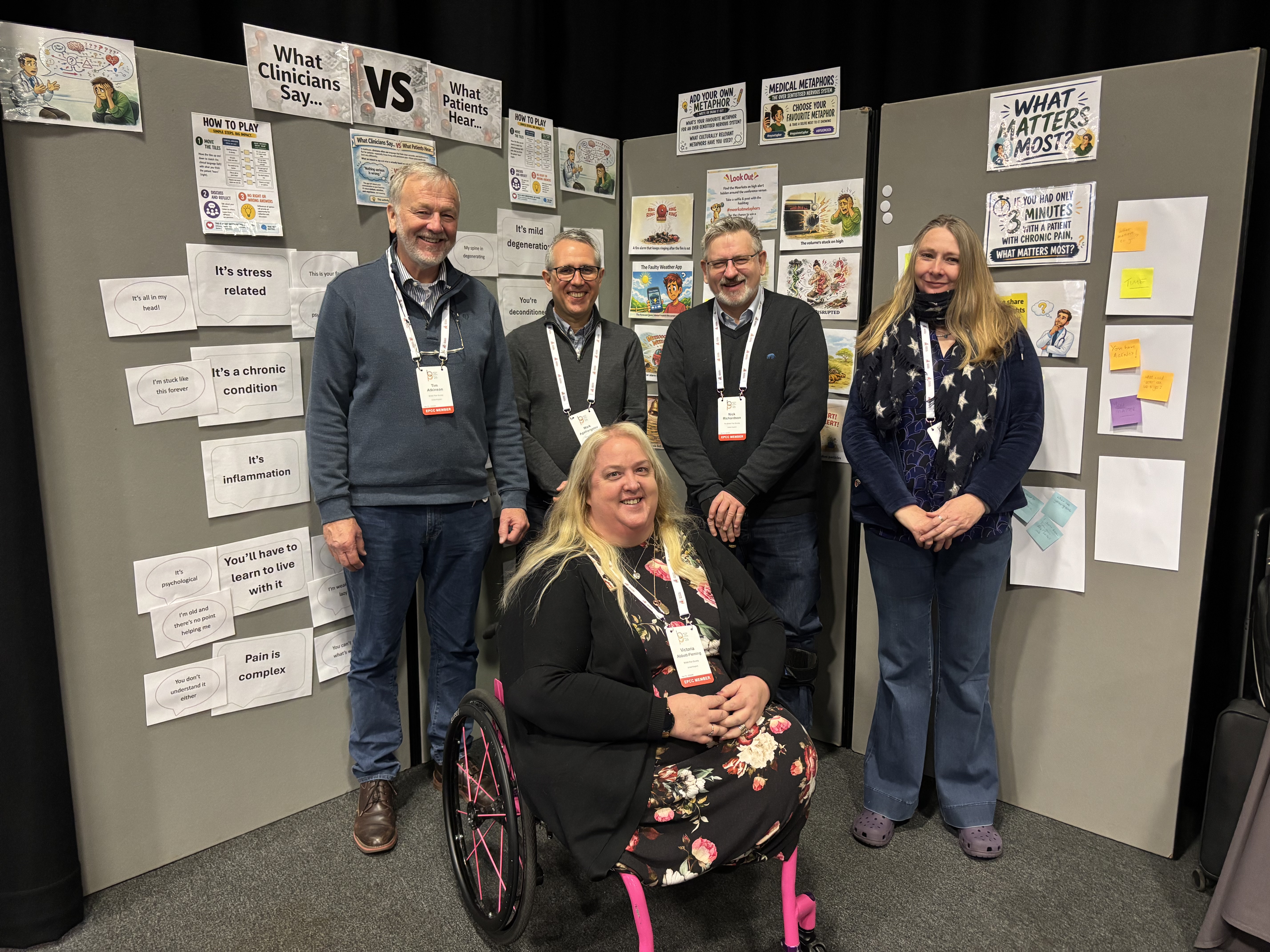
The Annual Scientific Meeting in Harrogate gave the EPCC (Expert Patient and Carer Committee) a valuable opportunity to connect with delegates, share ideas, and highlight the importance of lived experience in pain care.
Throughout the exhibition hall, our interactive activities encouraged reflection, discussion, and collaboration between people living with pain, carers, and healthcare professionals. The response was overwhelmingly positive, with delegates engaging thoughtfully and enthusiastically across all activities.
Activity Highlights
3-Minute Challenge – “What Matters Most?”
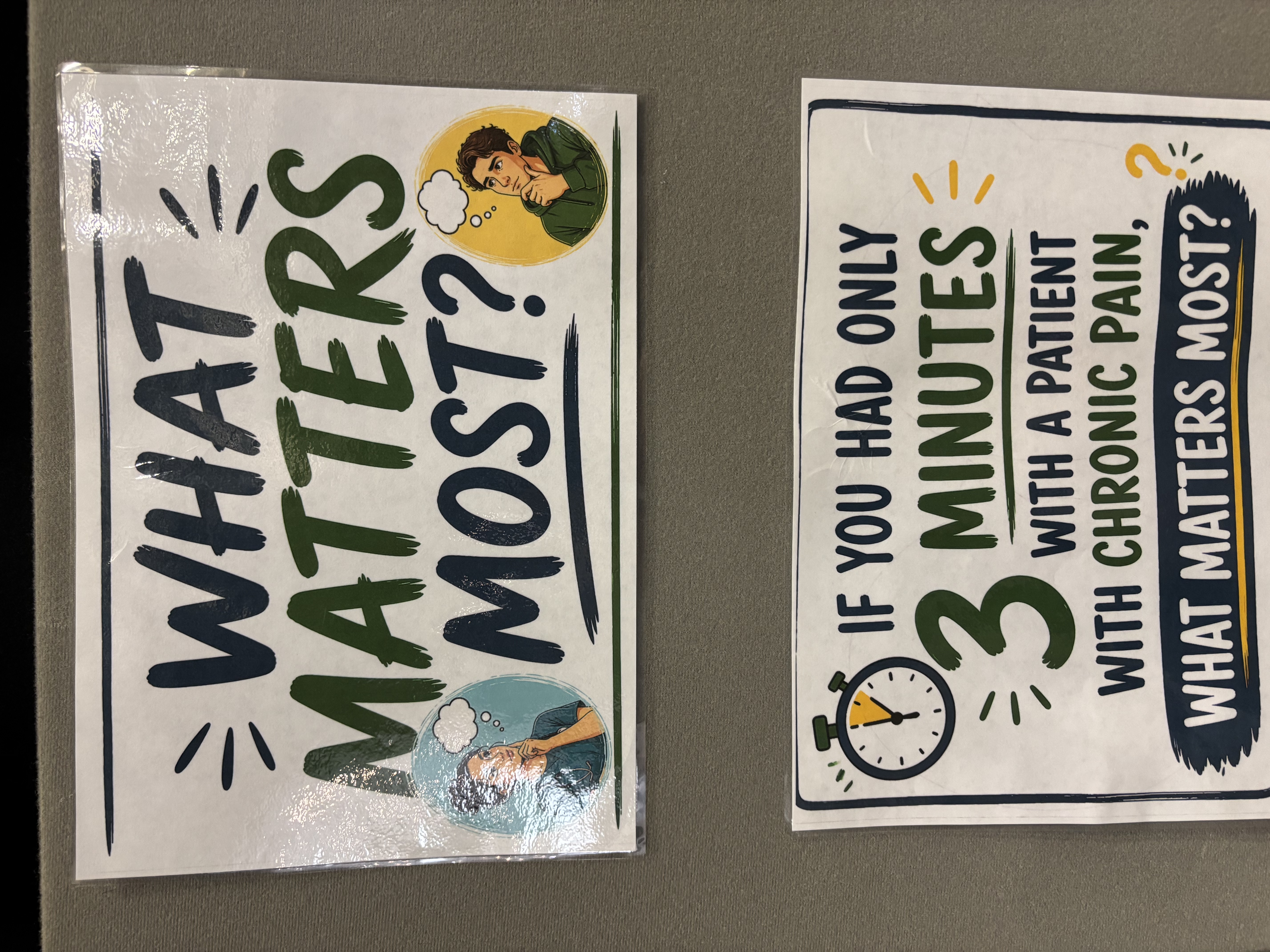
This activity invited delegates to consider an important question:
“If you had only 3 minutes with a patient living with chronic pain, what matters most?”
The challenge sparked meaningful conversations about communication, listening, and what matters most in clinical encounters. Delegates reflected on the balance between medical priorities and patient priorities, with many recognising the importance of giving people time, validation, and a sense of agency.
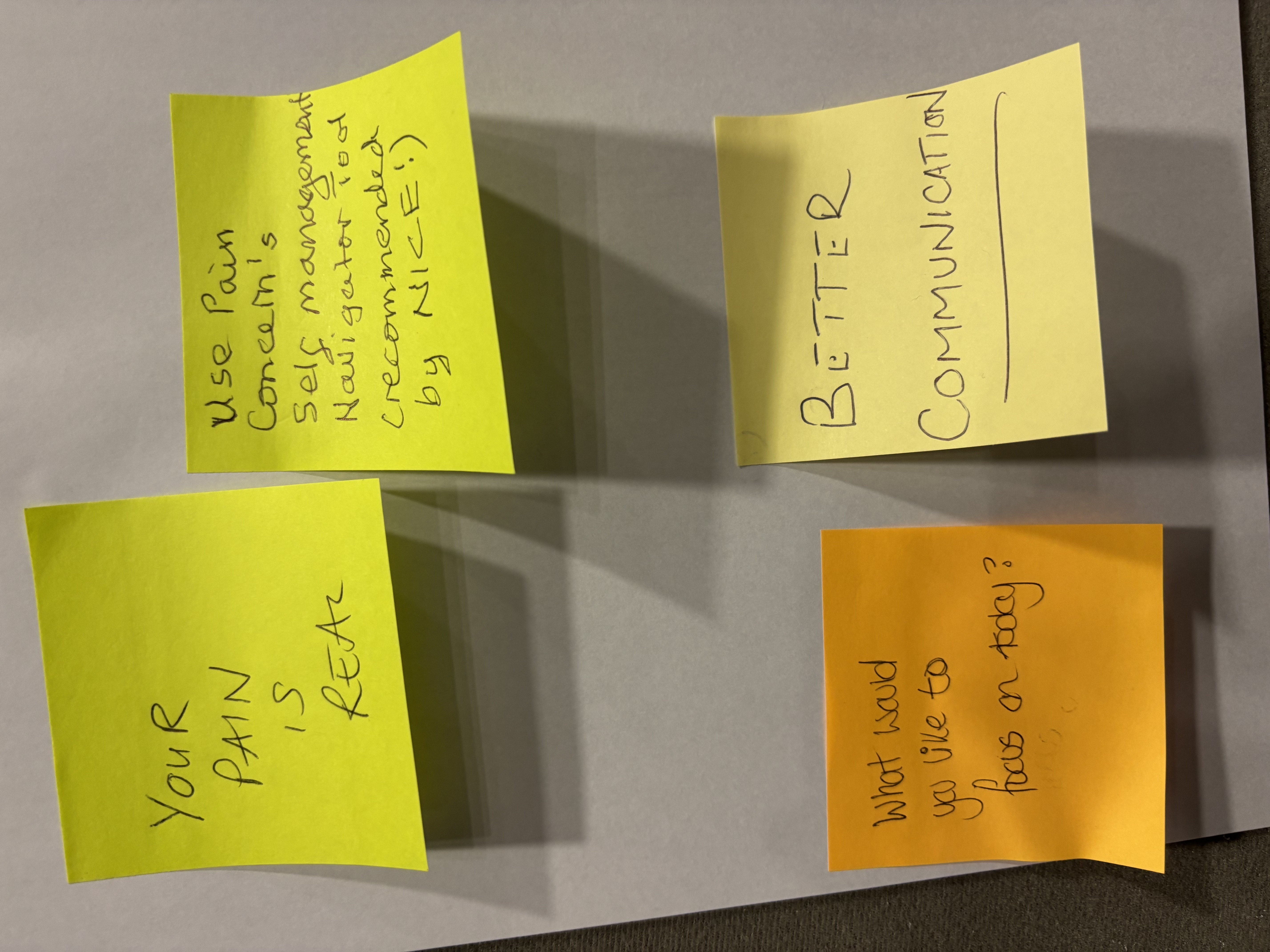
Responses included:
- “You matter”
- “You have agency”
- “Better communication”
- “What matters to you?”
- “Your pain is real”
The activity demonstrated how small changes in approach and language can have a significant impact on the experience of care.
What clinicians say vs what patients hear
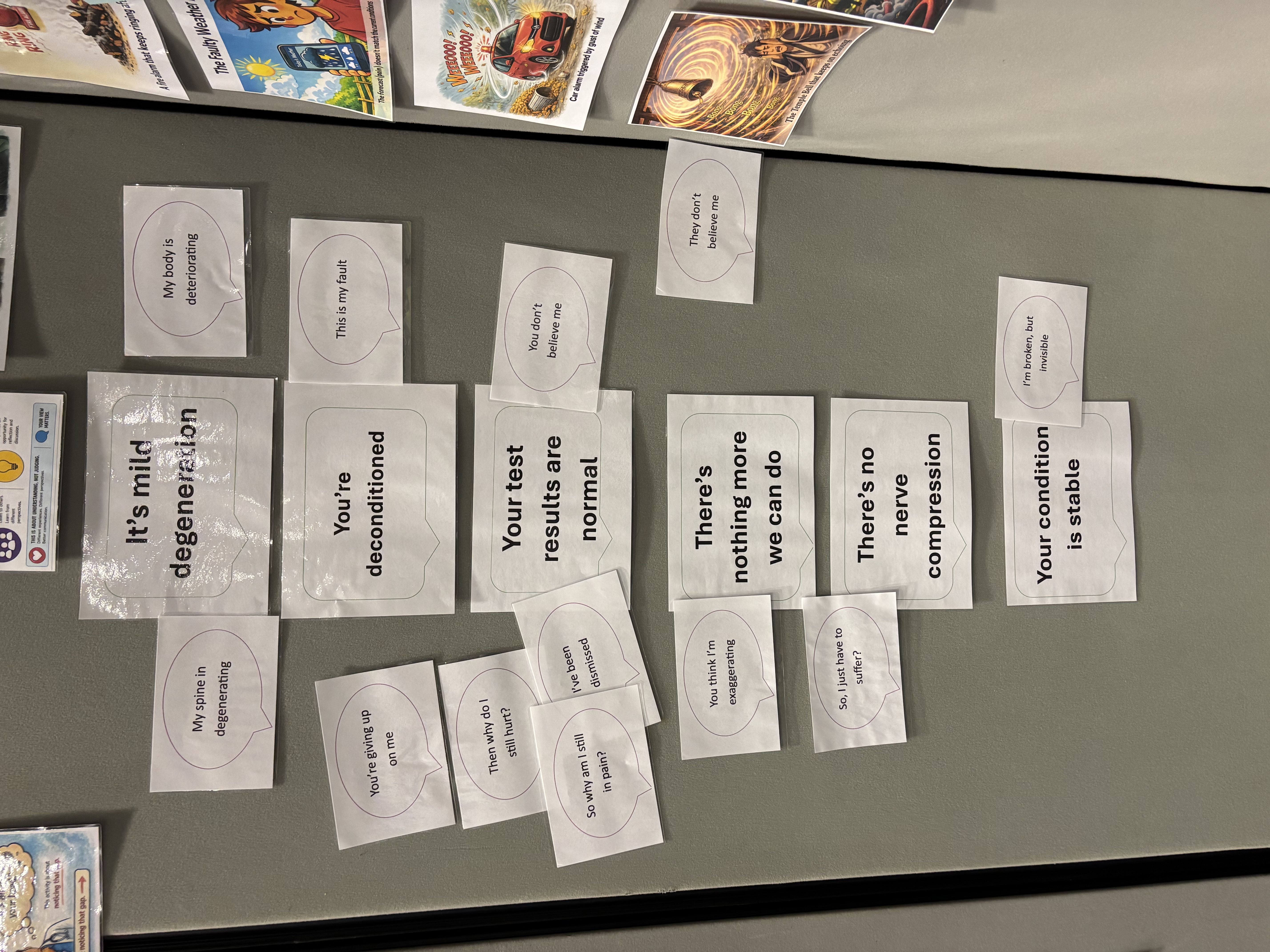
One of the busiest and most thought-provoking activities at the stand explored how clinical language can sometimes be interpreted differently by patients.
Participants matched common clinical phrases with possible patient interpretations, prompting honest discussions about communication, reassurance, and unintended impact. The activity reinforced that there are no “right” or “wrong” answers - differences in understanding create opportunities for insight, empathy, and better care.
Many of the responses highlighted how people living with pain can feel dismissed or unheard, even when this is not the intention. Comments included:
- “You don’t believe me”
- “I’ve been dismissed”
- “You think I’m exaggerating”
- “I’m broken, but invisible”
- “So I just have to suffer?”
The activity generated important conversations about trust, validation, and the emotional impact of language used in healthcare settings.
Medical Metaphors
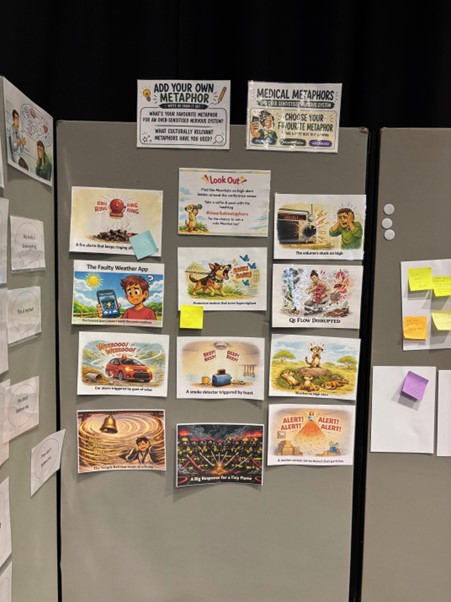
Delegates were invited to choose metaphor cards describing persistent pain, such as “a smoke alarm that goes off when you make toast.”
The metaphors helped explore how pain can be explained in relatable and accessible ways, while also highlighting the importance of communication in helping patients understand their experiences. The selfie station created a relaxed and engaging atmosphere, encouraging people to reflect on how metaphors can support shared understanding between clinicians and patients.
Find the Meerkats!
The hidden meerkat challenge quickly became a talking point across the venue. Delegates searched for four hidden meerkats, took selfies, and shared reflections on social media about why lived experience matters in the pain community using #meerkatmetaphor.
The meerkats also had a deeper connection to persistent pain. A patient recently described feeling “like a meerkat” - always alert, always watching out, and never able to fully switch off. The metaphor reflected the experience of living with persistent pain, where the nervous system can remain constantly on guard, with little opportunity for rest or relief.
This powerful image resonated with many delegates and helped spark conversations about hypervigilance, stress, exhaustion, and the hidden impact of living with ongoing pain.
All of these activities created space for meaningful conversations about the realities of living with persistent pain and the importance of listening to patient experience.
As Tim Atkinson reflected:
“The ASM was a great opportunity to meet and discuss our work with BPS members. The activities proved great conversation starters and the meerkat activity raised as many eyebrows as questions, but again, got the conversations going.”
Why lived experience matters
Lisa Blanchard was a first time attendee from EPCC:
"It was a fantastic experience to attend my first British Pain Society Annual Scientific Meeting as a member of EPCC. To be part of a group of people all working together to represent & raise the importance of patient voice at a national level was amazing."
Across all the activities, one message came through clearly: lived experience is essential expertise.
The discussions showed how involving people living with pain helps bridge the gap between clinical intention and patient experience. Lived experience brings insight into what helps, what harms, and what truly matters to people navigating persistent pain every day.
The activities reinforced that lived experience is not an “optional extra” - it is central to improving services, education, communication, and compassionate care.
Most importantly, the ASM reinforced the EPCC’s core message: we are here for the BPS - ready, willing, and able to contribute.
The EPCC looks forward to continuing to work alongside healthcare professionals, people living with pain, carers, and BPS members to ensure lived experience remains at the heart of pain care and service development.